Network Automation & Deployment: Infrastructure Automation with Terraform, Ansible, & Python
Automated AWS infrastructure provisioning, Linux configuration, SSH connectivity verification, and structured reporting.
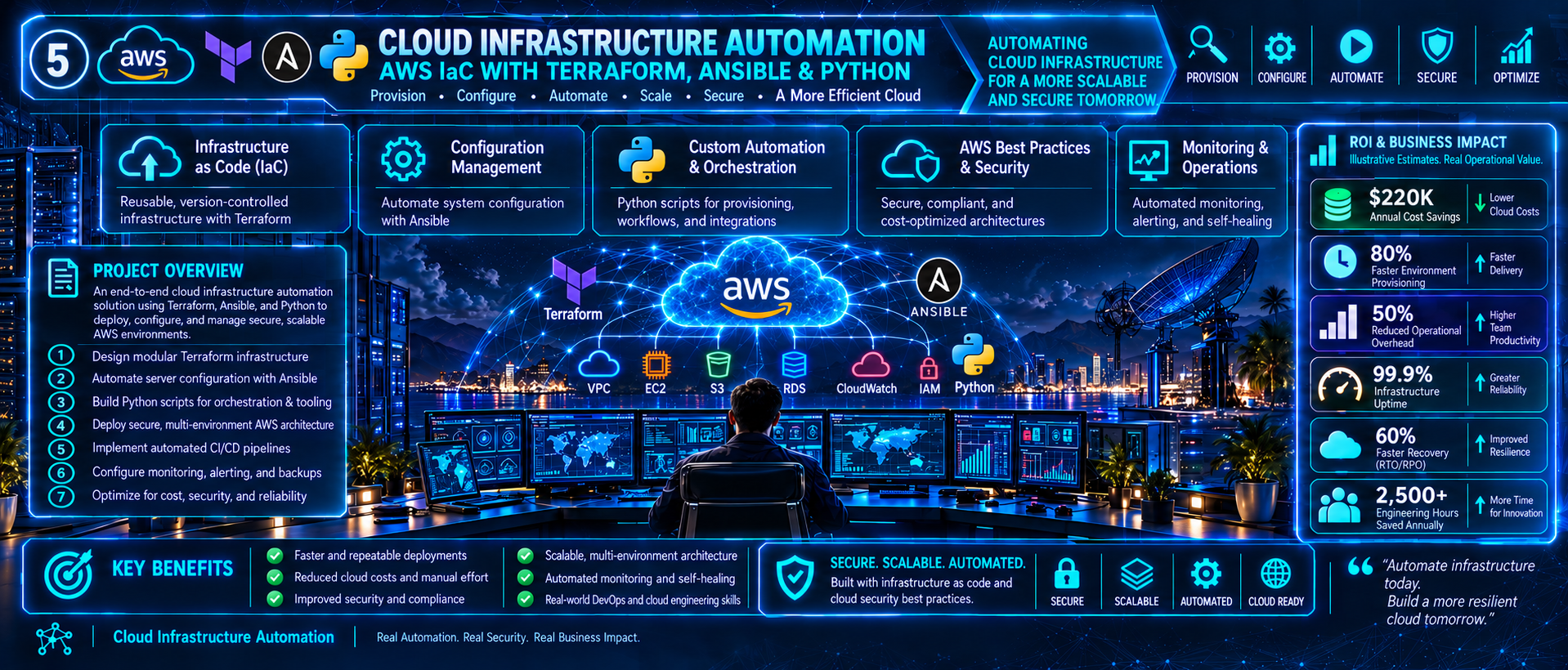
Engineering Problem
Manual cloud infrastructure provisioning introduces configuration inconsistencies, increases deployment complexity, and creates opportunities for human error. Without standardized infrastructure automation, provisioning Linux instances, configuring administrative access, and validating connectivity require repetitive engineering effort across multiple environments. Cloud engineering teams need secure, repeatable, and verifiable deployment workflows that improve infrastructure consistency, operational efficiency, and scalability.
Technical Solution
Developed an infrastructure-as-code workflow using Terraform to provision two AWS EC2 instances running Ubuntu and Red Hat Enterprise Linux. Implemented Ansible inventory files and YAML playbooks to automate Linux user provisioning and configuration across both cloud instances. Developed Python-based verification scripts to test SSH port 22 connectivity, evaluate instance accessibility, and generate structured CSV reports documenting infrastructure validation results.
Business & Technical Value
Business Value:
- Reduce cloud deployment time and manual provisioning effort through standardized infrastructure-as-code workflows.
- Improve operational reliability and infrastructure consistency through automated Linux configuration, repeatable deployments, and independent validation.
- Support scalable cloud operations, improved engineering productivity, and business continuity through reusable automation procedures.
Technical Value:
- Demonstrate Terraform infrastructure provisioning, AWS EC2 management, Linux administration, and infrastructure-as-code practices.
- Implement Ansible inventories, YAML playbooks, SSH authentication, and automated user configuration across Ubuntu and RHEL systems.
- Develop Python connectivity validation, TCP port testing, CSV reporting, and repeatable post-deployment verification procedures.
Tools & Capabilities
Core Tools:
Supporting Technologies:
Implementation & Validation Highlights
- AWS Infrastructure Provisioning: Developed and executed Terraform configurations to provision two AWS EC2 instances running Ubuntu and Red Hat Enterprise Linux; validated infrastructure deployment, collected instance IP addresses, and verified cloud resource accessibility.
- Ansible Configuration & User Automation: Created structured Ansible inventories and YAML playbooks to configure Linux systems, establish SSH-based administrative access, and automate user provisioning consistently across both EC2 instances.
- Python Verification & Reporting: Developed Python scripts to test TCP port 22 connectivity for both cloud instances, validate SSH service reachability, and generate structured CSV reports documenting deployment verification and operational readiness.
Return on Investment (ROI)
Explore the supporting portfolio
The canonical engineering documentation and infographics remain in the separate public portfolio repository.
Explore Project 05 on GitHub ↗